
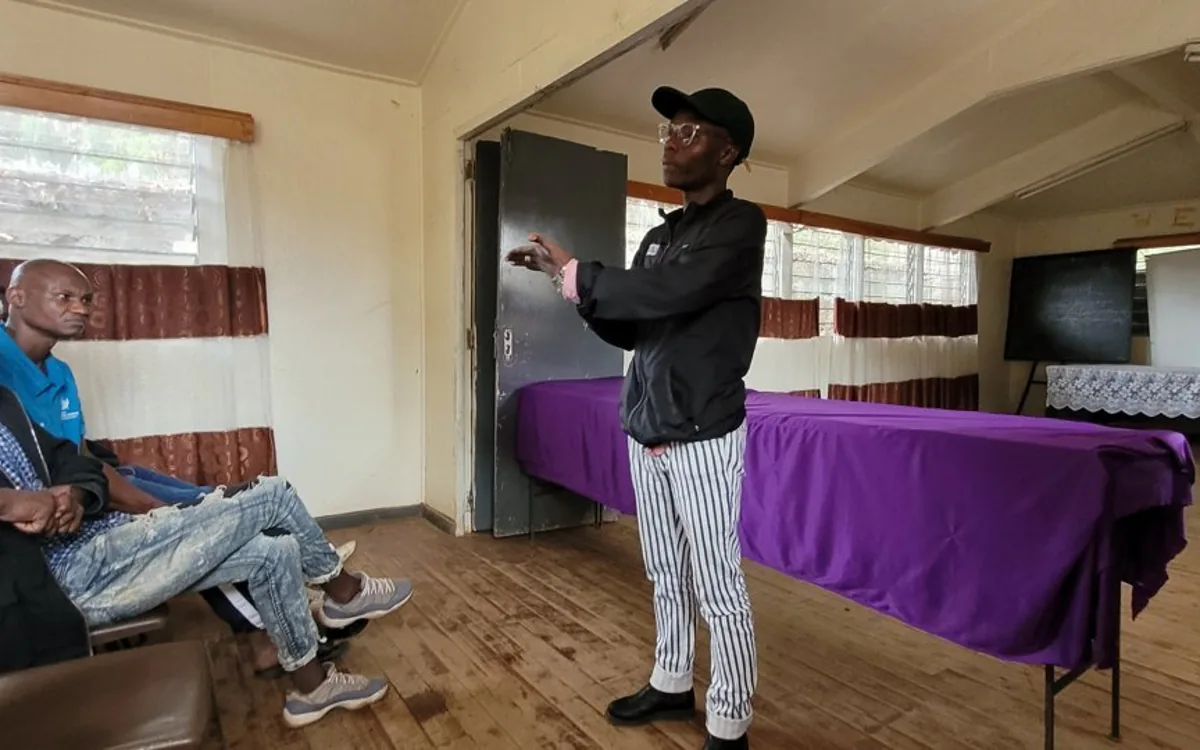
A short, accurate follow-up note can be more useful than a long report that never reaches the people who took part.
Record decisions, including the absence of one
A discussion can surface an important concern without reaching agreement. That is a valid result. A record becomes misleading when an organiser converts a suggestion into a commitment or treats silence as consent.
The HAKI Exchange pilot series explores inclusive meetings, clear advocacy questions and organisational memory. This article brings those themes together as practical guidance. It describes a method a team can try, rather than a new event or a measured result from K-HAKI's programmes.
Use a small action record
For each agreed next step, record the issue, the action, the responsible person or role and a realistic review point. Note dependencies: a partner's confirmation or an available budget may still be needed. Do not announce a service, partnership or payment before it is agreed.
Separate the internal record from the public update. Participants may need a useful summary, but private contact details or sensitive accounts do not belong in a publicly circulated minute. Check whether the wording accurately reflects what people contributed.
Return with an explanation
An update should say what happened, what remains open and what changed. If an action did not proceed, explain the reason and the next decision required. Avoid replacing a missed commitment with another vague promise.
Store the record where authorised colleagues can find it when people change roles. At the next meeting, review outstanding actions before adding new ones. This gives residents a way to see the relationship between their participation and the work that follows. Accountability becomes a regular practice when people can ask about an earlier commitment and receive a clear, evidenced answer.